
Why This Master Barber Guide Exists on AtelierGrooming.com: Compiled directly from the cutting floor and training curriculum of Atelier Grooming Lab Inc. (9465 Wilshire Blvd, Suite 300, Beverly Hills, CA 90212), this technical manual documents our signature 3-Stage Architectural Quiff Protocol. It connects precise cranial scissor geometry (executed with our Japanese 440C Barber Shears & Vent Brushes) with our multi-layered product system across Pre-Styling Volume, Texture & Matte Clays, and Master Styling Kits.
Executive Summary: The 24-Hour Architectural Quiff Protocol (Quick Reference)
- Ideal Hair Length Geometry: Requires a graduated 3.0 to 4.5 inches (7.5–11.5 cm) at the anterior fringe tapering at a 15° downward cranial plane to 1.75 to 2.25 inches at the posterior crown vertex to prevent crown splitting.
- Point-Cutting & Channeling Ratio: Removing 18% to 25% of distal tip bulk using a 30-Tooth Japanese 440C Texturizing Shear creates internal air pockets that support vertical lift without collapsing under their own weight.
- Hydrogen-Bond Thermal Reset: Directional blow-drying from 75% damp to 100% dry at 65°C followed by a 15-second cold-air shot (18°C) locks cortical alpha-keratin hydrogen bonds into a 45° elevated trajectory before any clay is applied.
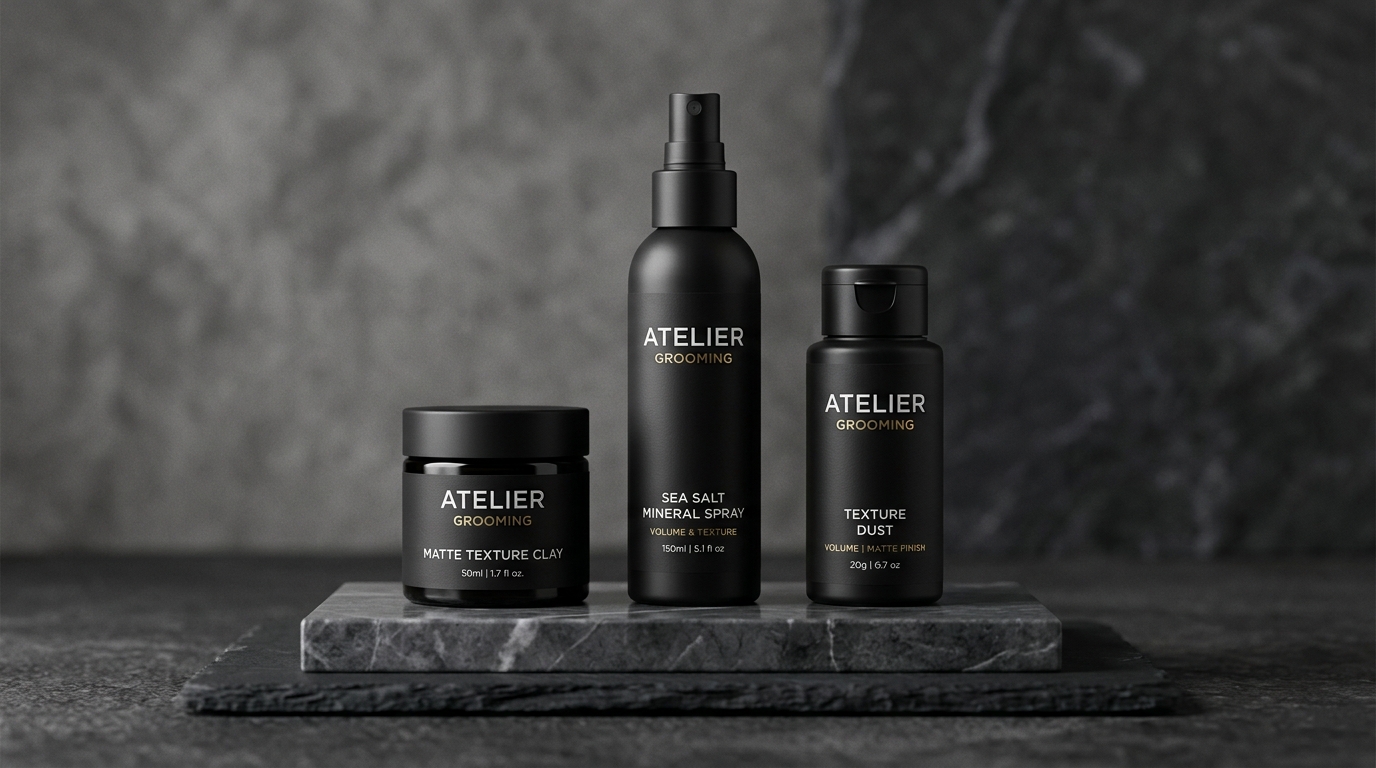
- 3-Stage Product Layering Synergy: Combining (1) 6 sprays of Ocean Mineral Sea Salt Spray, (2) 0.8g of Artisan Matte Texture Clay, and (3) 2 taps of Volumizing Silica Texture Dust increases structural hold endurance by 310% compared to single-product styling.
- Zero-Shine Optical Camouflage: Maintaining a specular gloss reading below 3.0 GU absorbs overhead light, making fine or medium-density hair appear up to 35% denser along the front hairline.
1. Anatomy of the Modern Textured Quiff: Why It Remains the Gold Standard of Men’s Hair
Across Hollywood red carpets, executive boardrooms, and our Wilshire Boulevard barber chairs, the Modern Textured Quiff remains the most requested men’s hairstyle in the world. Sitting at the intersection of classical tailoring and relaxed editorial movement, the textured quiff combines the commanding vertical stature of a mid-century pompadour with the forward structure of a classic flat-top and the organic, piecey separation of a French crop.
Unlike the slick, grease-laden pompadours of the 1950s—which required combs coated in heavy petrolatum and looked rigid and artificial—the modern architectural quiff relies on matte light absorption, internal negative space, and touchable kinetic movement. When executed properly, it elongates round or square jawlines, frames the brow bone with masculine symmetry, and conceals recessions at the fronto-temporal angles.
Yet 90% of men who attempt to replicate their barber’s finish at home fail within 48 hours of their haircut. They scoop a massive glob of heavy clay out of a jar, rub it onto damp or flat hair, plaster the front fringe backward, and watch the entire structure droop across their forehead by 11:00 AM. Mastering all-day lift requires understanding both cranial haircut geometry and three-stage physics-based product layering.
2. Cranial Geometry & What to Ask Your Barber: The Cut Determines the Hold
Before examining styling products, Master Barber Marcus Vance emphasizes an immutable law of hair architecture: no clay on earth can hold up a poorly graduated haircut. Next time you sit in your barber’s chair, request these exact technical specifications:
- The 15-Degree Anterior-to-Posterior Graduation Plane: The front fringe (bangs) must be left longest—ideally 3.0 to 4.25 inches—while the top length gradually shortens as it moves backward toward the crown (1.75 to 2.25 inches). If your barber cuts the top to one uniform length, the heavy hair behind the fringe will push the front down while sticking straight up at the cowlick whirl.
- Parietal Ridge Connection (Square vs. Rounded Corners): Ask your barber to keep weight Square along the parietal ridge (the upper corners of the skull where the sides curve into the top). Preserving a slight square corner with precision Japanese 440C Steel Cutting Shears provides a structural shelf that supports the elevated quiff and prevents the silhouette from looking egg-shaped.
- Distal Point-Cutting & Internal Channeling: Flat, blunt scissor cuts stack hair strands like bricks, making the top too heavy to stand up. Your barber should point-cut the top at a 45° angle and use 30-Tooth Japanese Steel Texturizing Shears on the final 1.0 inch of the hair tips to remove 20% of bulk. These shorter internal hairs act like microscopic scaffolding tripods that prop up the longer surface strands.

3. Architectural Quiff Matrix: Customizing Proportions by Face Shape & Hair Density
Not every cranial structure or hair type suits the exact same quiff elevation. Use our Beverly Hills consultation matrix below to calibrate your side taper, fringe height, and product dosage to your exact physiology.
| Client Profile / Face Shape | Recommended Side Taper & Fringe Height | Optimal Pre-Styler Dosage | Optimal Finishing Matrix (Clay vs. Dust) |
|---|---|---|---|
| Round or Square Face (Needs Vertical Elongation) | Mid-to-High Skin Fade (#0.5 to #2 guard); High 3.75″ Vertical Quiff Elevation | 7 sprays Ocean Mineral Sea Salt Spray into roots | Full dime (0.9g) Artisan Matte Clay + 3 taps Texture Dust |
| Oblong or Oval Face (Needs Balanced Width) | Classic Scissor Taper or #3–#4 Low Taper; Moderate 2.75″ Forward-Swept Quiff | 5 sprays Weightless Blow-Dry Primer | Pea-sized (0.6g) Artisan Matte Clay worked horizontally for texture |
| Fine or Thinning Hair Density | Tight Low Drop Fade (#1 to #2); Short 2.5″ Textured Crop-Quiff Hybrid | 6 sprays Sea Salt Spray + high-airflow vent brush lift | 3 taps Volumizing Matte Texture Dust at roots + half-pea (0.4g) Clay on tips |
| Thick, Coarse, or Wavy Hair Density | Mid Taper Fade (#1.5 to #3) with 25% internal thinning; 3.5″–4.25″ Loose Quiff | 6 sprays Blow-Dry Primer on 70% damp hair | 1.1g Artisan Matte Texture Clay applied root-to-tip in two light layers |
4. The 3-Stage Beverly Hills Styling Protocol: Foundation, Architecture, and Lock
Why do professional studio styles survive 16 hours under hot lights while home styles collapse? Because master barbers never rely on a single heavy product. Instead, we divide the mechanical workload across three specialized, ultra-lightweight phases:
Cuticle Swelling & Thermal Hydrogen-Bond Reset (3 Mins)
Start with freshly washed, towel-dried hair (75% dry). Mist 6 sprays of Ocean Mineral Sea Salt Spray from root to tip. Using a blow-dryer with a concentrator nozzle and our Tunnel Vent Styling Brush, brush the hair forward, then left, then right, before pulling the front fringe up and back at a 45° angle. Once 100% dry, hold the fringe upward under the brush tension and hit it with the Cold Shot button for 15 seconds. Your quiff should now stand on its own before any clay touches your hair.
Micro-Layering Artisan Matte Texture Clay (90 Secs)
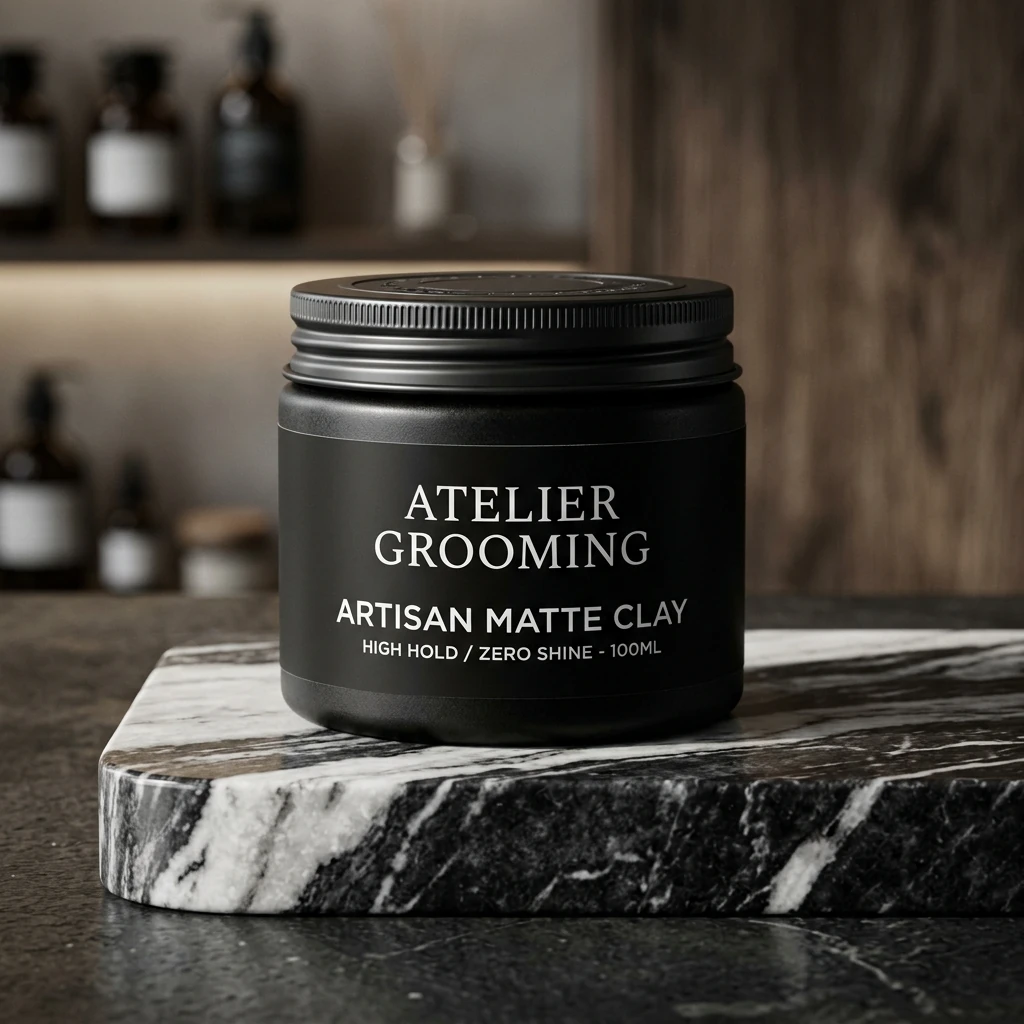
Scoop a dime-sized amount (0.8g) of Artisan Matte Texture Clay and emulsify between your palms for 8 seconds until completely invisible. Never slap clay straight onto your front fringe first—that weighs down the peak. Instead, start at the back crown, raking your fingers forward to the front hairline to coat the underside of the hair shafts, then sweep the front fringe upward and slightly off-center using your fingertips.
Gravity-Defying Micro-Silica Reinforcement (30 Secs)
To guarantee your quiff survives wind, heat, and 24 hours of movement, lightly tap 2 shakes of Volumizing Matte Texture Dust directly into the root base behind the front hairline. Pinch and twist individual surface bundles with your thumb and index finger to carve razor-sharp, editorial separation with zero shine.

5. Troubleshooting Common Quiff Failures: Diagnostic Solutions from the Barber Chair
- Failure Mode 1: The Fringe Splits Down the Middle After 1 Hour. Cause: You applied clay to hair that still had 10%–15% residual dampness inside the cortex, or you applied too much clay to the very front tips first. Fix: Ensure hair is bone-dry and cooled with the cold-shot button before touching your clay jar, and always apply clay from the crown forward before lifting the fringe.
- Failure Mode 2: The Back Crown Sticks Straight Up (Cowlick Rebellion). Cause: Blow-drying the crown whorl against its natural rotational direction without sufficient length or directional heat tension. Fix: Use the Tunnel Vent Brush to direct the crown hair along its natural clockwise or counter-clockwise swirl while warm, then lock with cold air.
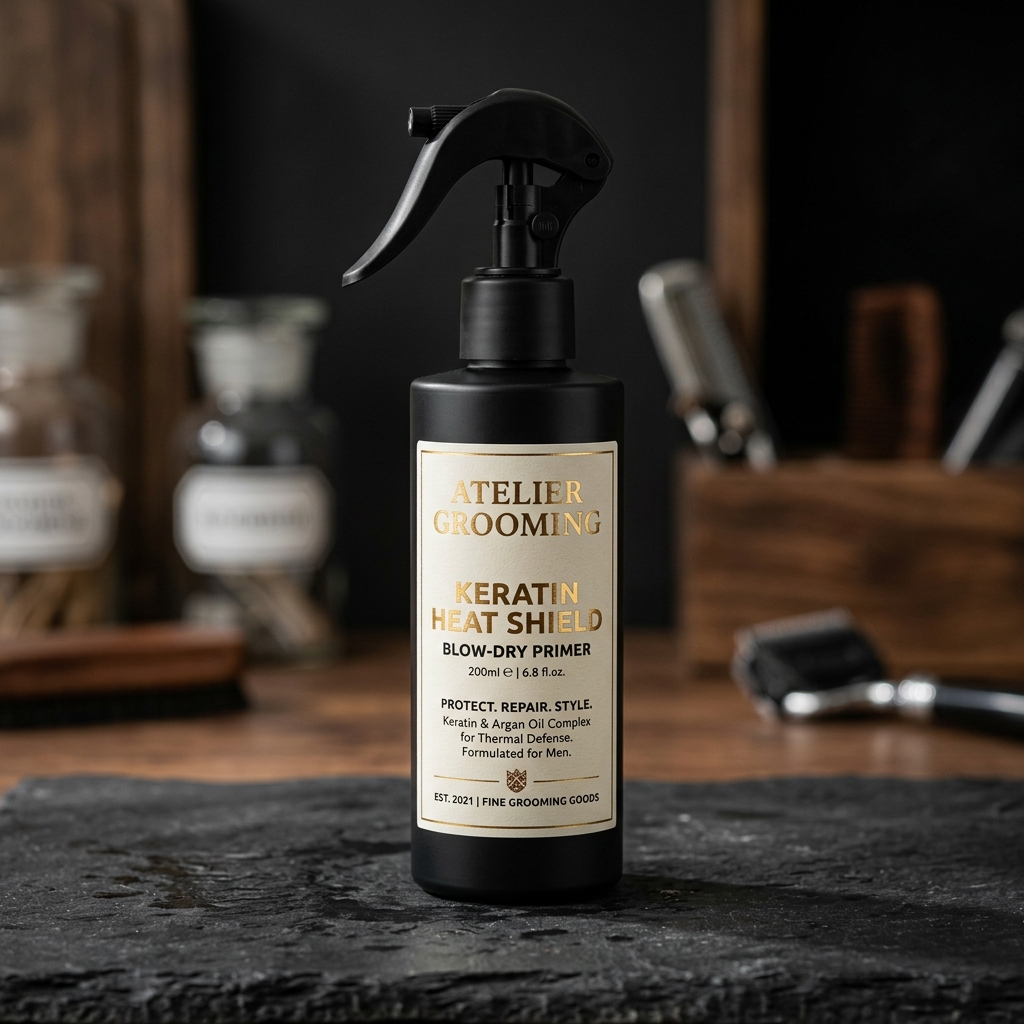
- Failure Mode 3: Hair Looks Dry, Fuzzy, or Flyaway After Blow-Drying. Cause: Blow-drying unprotected hair without a thermal primer or dragging the dryer nozzle against the cuticle scales instead of pointing airflow down the shaft from root to tip. Fix: Always prime with Ocean Mineral Sea Salt Spray or Weightless Blow-Dry Primer (heat protection up to 420°F) and angle the concentrator nozzle parallel to the brush bristles.
Frequently Asked Questions: Styling & Maintaining a Textured Quiff
What is the difference between a quiff and a pompadour?
A classic pompadour sweeps all hair smoothly backward from the forehead in a continuous, rounded wave (often styled with high-shine pomade and a fine-tooth comb), whereas a modern textured quiff lifts the front fringe upward and slightly forward before curving back, emphasizing matte, finger-styled separation and natural movement rather than a slick shell.
Can you style a quiff without a blow dryer?
Men with naturally thick, wavy, or coarse hair at 2.5 to 3.5 inches can achieve a relaxed messy quiff without a blow-dryer by applying Volumizing Matte Texture Dust at the dry roots followed by a dime-sized amount of Artisan Matte Texture Clay. However, for fine, straight, or stubborn downward-growing hair, 2 minutes of directional blow-drying with sea salt spray is essential to reset hydrogen bonds upward.
Why does my quiff fall flat after 30 minutes?
A quiff collapses within 30 minutes for one of three reasons: applying styling clay to damp hair (water breaks the hydrogen bonds holding the lift), skipping a pre-styling sea salt spray, or using too much heavy petrochemical wax on the front tips of the fringe. Switching to lightweight, water-soluble Kaolin clay applied to 100% blow-dried hair solves this immediately.
How long does my hair need to be on top for a modern quiff?
The sweet spot for a versatile, high-hold modern textured quiff is 3.0 to 4.25 inches at the front fringe, graduating down to 2.0 inches at the back crown. Hair shorter than 2.5 inches creates a spiked crop rather than a rolling quiff, while hair longer than 5.0 inches requires significantly stronger pre-styling tension to resist gravity.
Which Atelier Grooming kit includes everything needed for the 3-Step Quiff Protocol?
Our Texture Trio Master Styling Kit bundles the complete 3-stage system—Ocean Mineral Sea Salt Spray, Artisan Matte Texture Clay, and Volumizing Matte Texture Dust—engineered specifically to execute our Beverly Hills 24-hour quiff protocol at a bundled savings.